Concorde G‑BBDG History

G‑BBDG, c/n 202, was the third British Concorde built and was one of two production test aircraft (French Concorde F‑WTSB, c/n 201, being the other). They were different in many ways from their four predecessors, making it necessary to repeat certain work to obtain certification. However, like the prototype and pre-production aircraft, Delta Golf also had flight observer's stations installed in the forward cabin. Even though 201 and 202 were called production aircraft, they never went into service because the final version of the aircraft, as specified by the airlines, was different yet again - although not in a way that affected handling or performance certification. Ultimately it was therefore these two aircraft that did the bulk of the flying that allowed the final certification of Concorde for airline service.
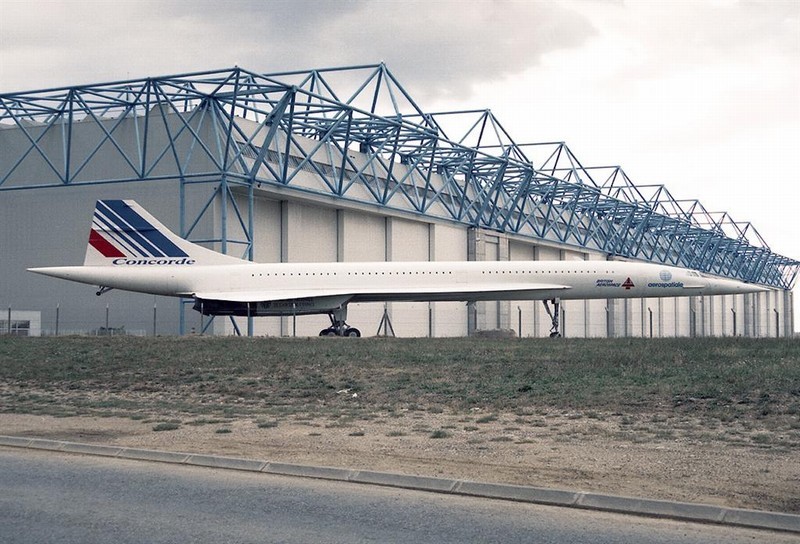
Delta Golf's first flight was on 13th February 1974 and was made by BAC test pilots Peter Baker and Brian Trubshaw from Filton to Fairford. The flight lasted 1hr 45 minutes and was supersonic for 12 minutes - reaching a top speed of Mach 1.4 at a height of 42,000ft. On 10th April 1974, and on its 15th flight, DG flew at Mach 2 for the first time and the following July became the first production Concorde to land at Heathrow for integration tests. In August, Delta Golf made history by becoming the first aircraft to carry 100 passengers at Mach 2. Over the next few years Delta Golf continued with an extensive flight test program for the purposes of engineering tests, CAA certifications, BA crew training and public relations and promotional work, visiting places such as South Africa, Singapore and several countries in the Middle East.

Delta Golf in fact carried on flying after the 14 production aircraft had been delivered to the airlines. Work included further performance enhancements, such as the certification of a re-designed air intake profile. This modification, coupled to an uprated engine, allowed an increase in payload of 1,500-2,000lbs. Another change was the extension of the control surface trailing edges by around two inches - a modification that many now feel was part of the reason for the rudder delaminations seen on the fleet over the years. What turned out to be DG's last flight occurred on 24th December 1981 from Filton and back again with pilots Peter Baker and Roy Radford at the controls. Delta Golf was kept serviceable inside the huge Brabazon Hangar at Filton throughout early 1982 for any further development work or test flights that may have been required, however, ultimately no such flights were deemed to be necessary and DG never flew again.
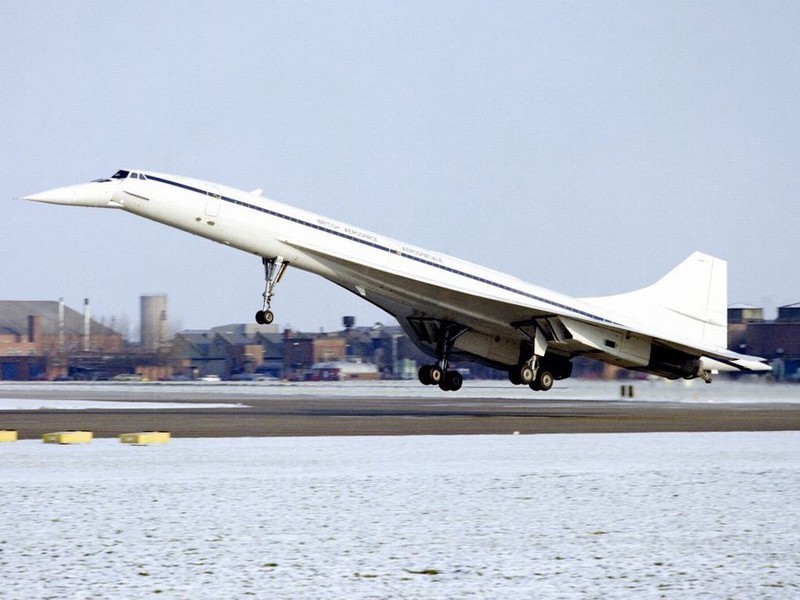
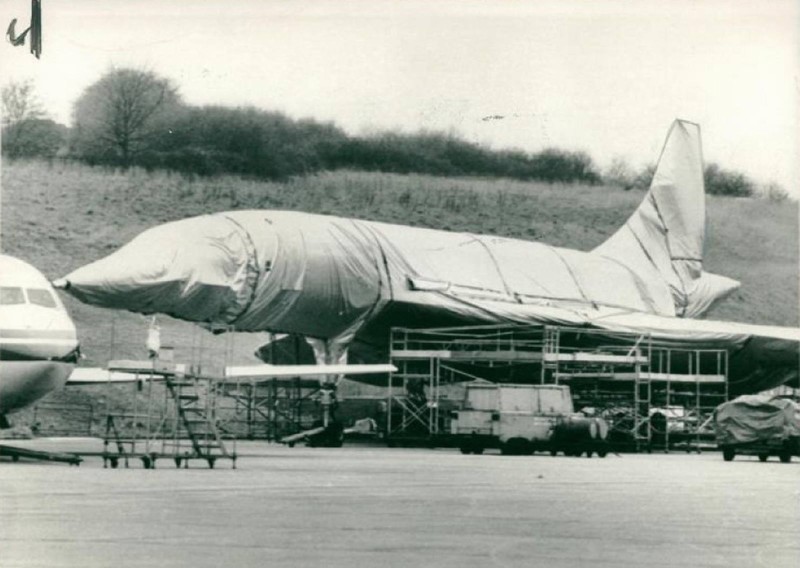
At the end of its flying life Delta Golf was placed in storage out on the airfield at Filton and was intially placed inside a "Dri‑Clad" bag in an attempt to protect it from the elements. Unfortunately, this proved unsuccessful as water managed to get inside and cause condensation and the bag was therefore removed. British Airways had a support contract which allowed them access to DG and in April 1984 they acquired title to the aircraft and started using it as one of the main sources of spare parts. Up until that point the airline had only been flying six of its seven aircraft and had been using a four year old aircraft, G‑BOAG, for spares. With access to Delta Golf, British Airways set out on returning G‑BOAG to flight status. To protect their investment and to keep prying eyes from seeing what was very quickly becoming an eyesore, BA constructed a special hangar for G‑BBDG at Filton. The '202 hangar', as it became known, was completed in early 1988. The aircraft (minus tail fin) was moved inside in May 1988.
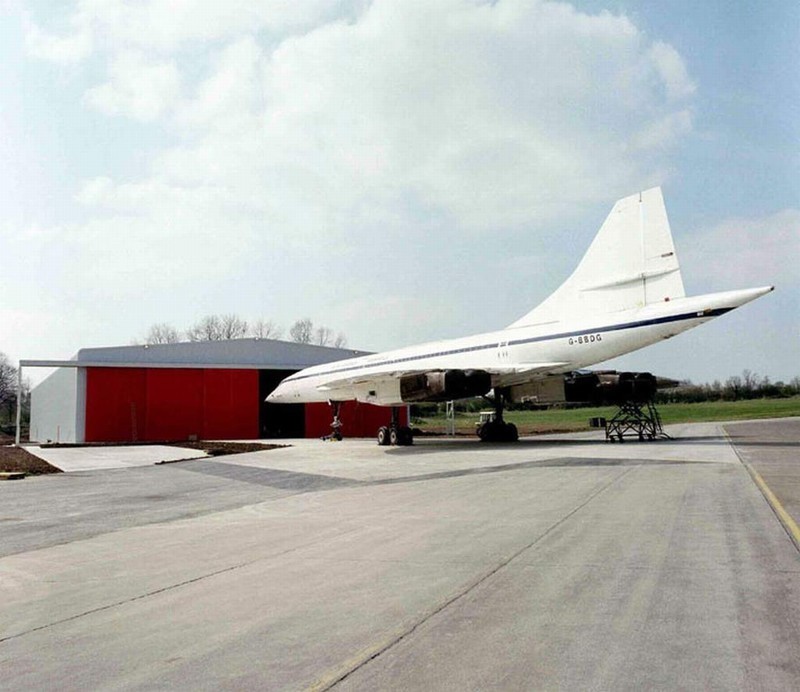
As Delta Golf was structurally sound, in the early 90s British Airways investigated the possibility of refitting the aircraft for airline service. This would have allowed the airline to keep six or seven aircraft flying whenever any of their Concorde fleet where grounded for routine engineering maintenance. However, the plan was found to be too costly and was rejected. The study did prove though that, in theory, if one of the seven BA aircraft suffered serious damage, parts from the damaged (and written-off) aircraft could be fitted to DG and the airframe used to bring the fleet back up to strength. That said, there were some doubts on whether a modified Delta Golf would gain certification due to the fuselage skin being slightly thinner than that of the fleet aircraft and also the fact that the life of the airframe had been reduced due to the the higher than normal stresses it was put under during the rigorous test programme, thus possibly making it unsuitable for long-term airline use.
In 1995, Concorde G‑BOAF's droop nose was damaged in a collision with a hangar door during a ground handling accident at Heathrow. In order to be able to return the aircraft to flying status as quickly as possible, BA decided to swap it for the droop nose on DG. Later investigation revealed that Alpha-Foxtrot's nose was not too badly damaged and it was repaired and kept as a spare. (note: - 10 years later AF's nose ultimately ended up being fitted to Delta Golf during restoration in 2005.
Even as it looked like the end of the road was near for Delta Golf, she was again found to be useful in late 2002 as she was moved temporarily into the West bay of the Brabazon Hangar for trial fittings of the prototype of the new strengthened cockpit doors required by the authorities on the British Airways and Air France fleets after the tragic events of September 11th 2001.
Having been in storage and Filton for more than 20 years, Delta Golf was formally offered to the Brooklands Museum Trust for restoration and display on 30th October 2003. In May/June 2004 she was moved in several sections by road to the museum's Weybridge site and after an extensive restoration programme was officially opened to the public by HRH Prince Michael of Kent in July 2006.
Primary source: www.concordesst.com